KyberDeck on the shop floor and in the warehouse
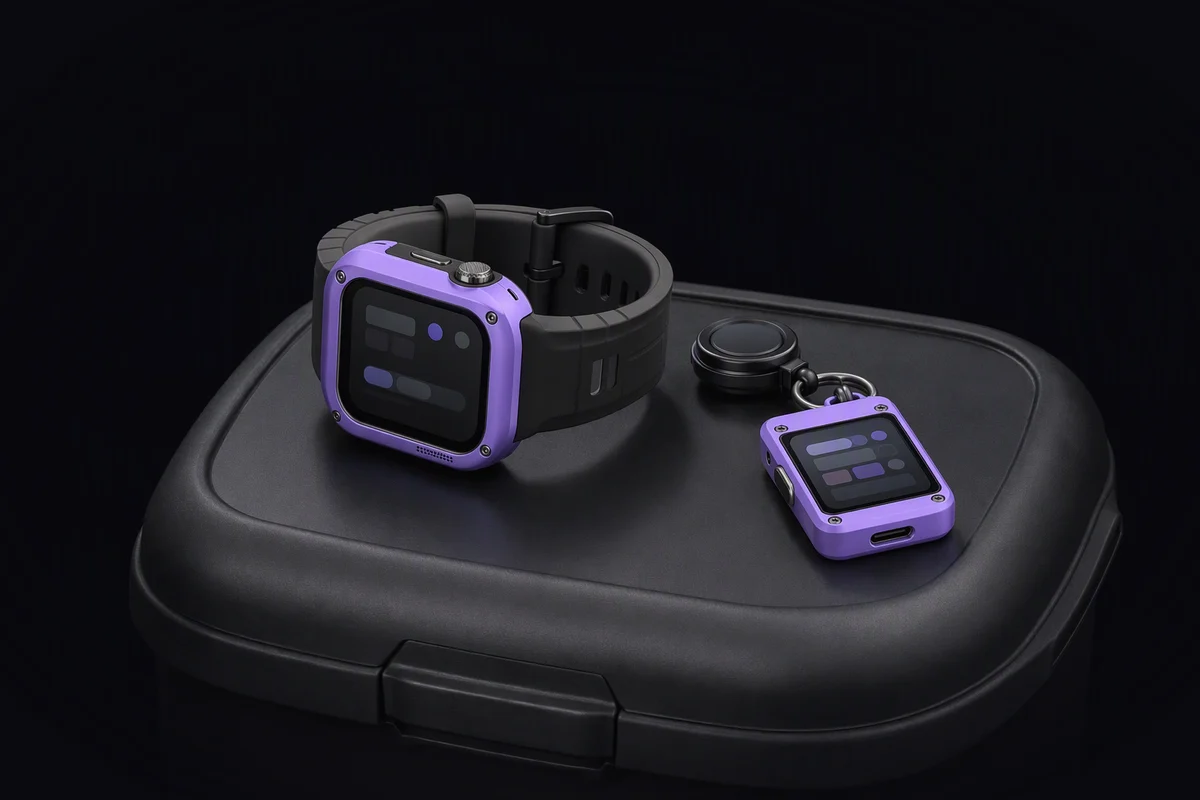
Picture the warehouse of a small distributor of garden equipment on a Friday in spring. A picker in gloves holds a paper list in one hand and a box in the other. The handheld scanner updates the stock program only when it is back in its cradle. The tablet on the wall is logged in as “warehouse”, so every pick looks as if the same person made it. A technician is in a customer’s garden on the edge of town with no signal, writing the replacement part on the back of the job sheet to type in later. And the small transport robot the owner bought last year has its own app, its own account and its own idea of which shelves it may visit.
By Monday the stock count is wrong again, and nobody can say which pick made it so.
The real cause: floor devices are someone else’s terminals
Office software was designed for desks, and the devices on the floor were bought one at a time, either as terminals for it or as products with systems of their own. Each one has its own login, its own permission model and its own way of failing when the signal drops. Identity is a shared password on a shared screen. The rules about who may release what live partly in the office program, partly in the robot’s app and partly in the warehouse manager’s head.
Where floor technology goes wrong
A shared login on a shared tablet. When everyone is “warehouse”, the record cannot say who picked, who corrected and who approved. Accountability ends at the wall the tablet hangs on.
Hands full, screen far away. A device that needs two hands and a look at a screen gets used at the end of the shift, from memory, not at the moment of the pick.
Office software on a floor without signal. Work done in a dead spot goes onto paper and is typed in later, which is exactly where the numbers drift.
Devices that report to their maker. Many connected devices send telemetry and recordings to their vendor’s cloud by design; hardware that does not report on you describes the alternative.
A robot with its own rules. A machine with its own app and account enforces its own idea of what may be moved. It respects its speed limits and knows nothing about the customer’s credit hold.
One system, in the forms the work needs
KYBERIOS puts the KyberDeck forms on the floor, each one running the same KyberLinux and the same company policies as the office server. The form changes with what the hands are doing; the system does not.
Band in the warehouse. The pick list on the wrist, confirmed by voice or a tap, with haptics instead of sound and a slider that cuts the microphone. The hands stay free for the box, and the stock record changes at the moment of the pick, once.
Card for identity and access. A card on a lanyard that knows who its wearer is to the building: who may open the stockroom, release a pallet or approve a discount. Every action on the floor carries a person’s identity, not a shared login.
Pocket in the field. The technician’s job list, the customer’s history and a real keyboard, working offline. What is done in a dead spot is recorded on the device and reconciled when the link returns.
Core in a warehouse robot. The same assistant in a machine that moves, with the safety envelope KyberBot carries: limits below the planner, a homeostat that slows the machine when the world stops matching the map, and every motion recorded. The argument is in a robot is a deck with wheels and KyberBot in a robot. It sits above certified safety equipment, never instead of it.
Node as the office server. The box in the back office that holds the company memory, the ledger and the cells the agents work in, and that every device on the floor answers to.
The rule about who may release a pallet is written once and holds on every one of them, kept on the device so it works offline and reconciled when the link returns; the longer version is in one kernel for agents, robots and devices.
The honest state: none of these forms is for sale, the specifications are design targets, and the KYBERIOS homepage keeps the status current.
A test you can run today
Walk the floor for half an hour with a notepad. Each time you see one of these, make a mark:
- Someone walks to a screen to record something they have just done.
- Someone types a shared password or uses a shared login.
- Someone writes on paper to type it in later.
- Someone waits for signal, or for a device to be back in its cradle.
- Someone asks a colleague whether they are allowed to do something.
Count the marks and multiply by the number of shifts in a week. Each mark is a moment where the record and reality part company. Next to each one, note which form would remove it: a Band, a Card, a Pocket, or a rule written once.
- KyberDeck
- warehouse
- shop floor
- identity